

Full Mouth Rehabilitation for Children
in South Delhi — Comprehensive Smile Restoration for Growing Smiles
Extensive tooth decay in a child does not always mean multiple extractions. Full Mouth Rehabilitation restores your child’s oral health, function, and smile through a personalised treatment plan — carefully designed by an AIIMS Alumni-led paediatric dental team in a gentle, child-friendly environment.
What Is Full Mouth Rehabilitation for Children?
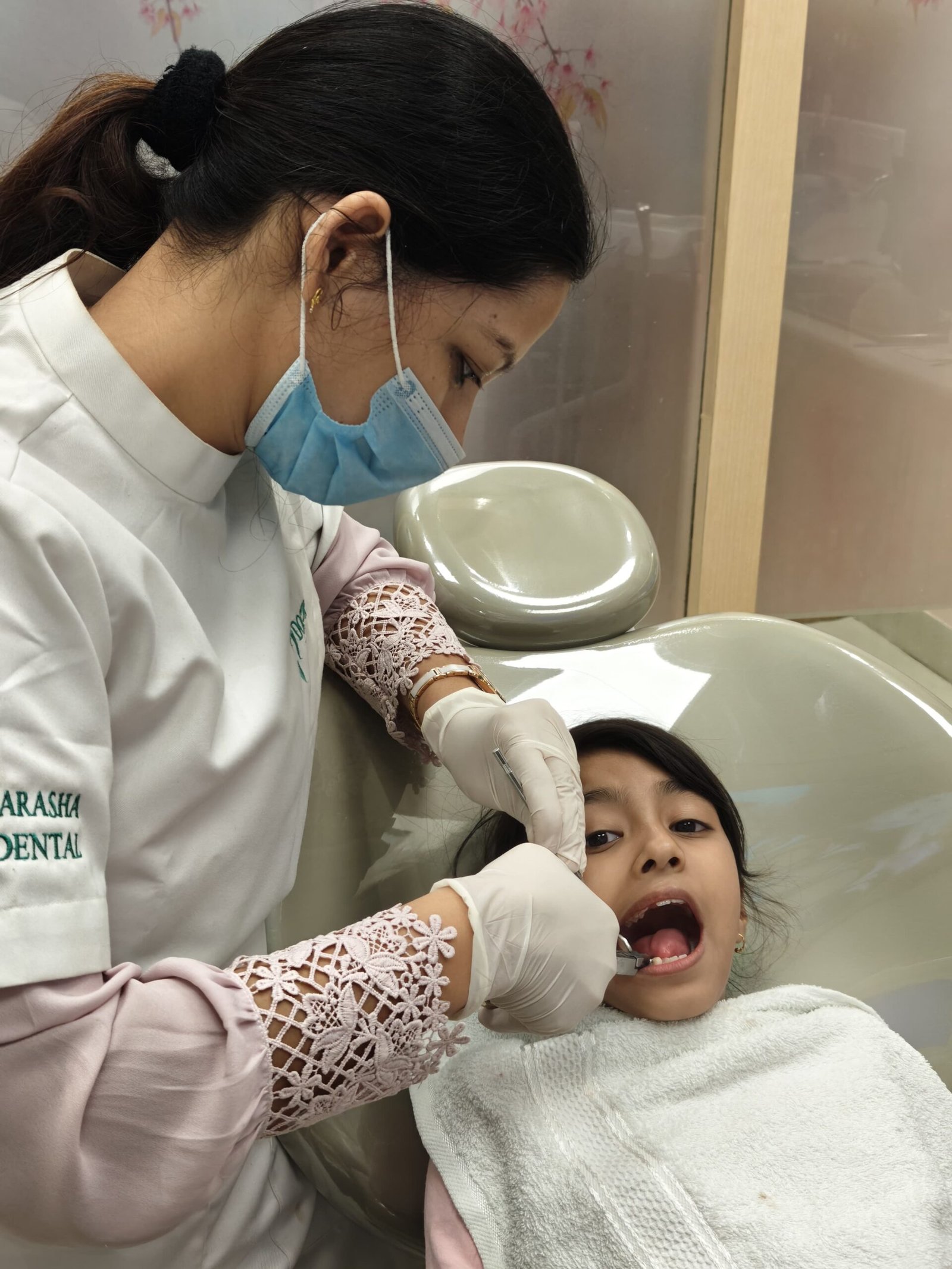
Full Mouth Rehabilitation for Children is a comprehensive, personalised dental treatment programme that addresses multiple dental problems in one coordinated plan — eliminating infection, relieving pain, restoring chewing ability, improving speech, and supporting healthy jaw growth and development. It combines fillings, root canal treatment, crowns, extractions (only when necessary), space maintainers, fluoride therapy, and preventive care, delivered under local anaesthesia, conscious sedation, or general anaesthesia based on the child’s age, anxiety level, and treatment needs.
What Is Full Mouth Rehabilitation
for Children?
When a child has extensive dental disease — multiple cavities, several infected teeth, broken teeth from trauma, or developmental defects affecting multiple teeth — a single filling appointment is not the answer. What the child needs is a comprehensive, coordinated treatment plan that addresses all dental problems at once, in the right sequence, with the right approach for their specific age and anxiety level. That is Full Mouth Rehabilitation.
At Tarasha Dental Clinic, Full Mouth Rehabilitation for Children begins with a complete diagnostic assessment — clinical examination, digital X-rays, and a thorough review of the child’s dental and medical history. A personalised treatment plan is then developed by Dr. Anju Singh Rajwar, MDS Paediatric Dentistry, AIIMS New Delhi, in consultation with the parents — covering which teeth need which treatment, in what order, and how treatment will be delivered comfortably.
- Personalised treatment plan — every programme is built around that specific child’s dental findings, age, anxiety level, and medical history
- Preserves natural teeth wherever possible — extraction is a last resort, not a default
- Restores oral health, function, and aesthetics — chewing, speech, and confidence are all clinical outcomes
- Treats multiple dental problems in one coordinated approach — not piecemeal single-tooth visits for months
- Delivered comfortably — under local anaesthesia, conscious sedation, or GA based on clinical need
- Followed by a preventive maintenance programme — to ensure healthy oral health going forward
Who Needs Full Mouth
Rehabilitation for Children?
Full Mouth Rehabilitation is recommended when a child has dental problems affecting multiple teeth that require coordinated treatment rather than isolated single-tooth management. The most common clinical situations are:
Severe Early Childhood Caries
Rapid, extensive decay affecting multiple primary teeth in children under 6 — often beginning on upper front teeth from bottle or breastfeeding habits. Requires comprehensive treatment, not just one or two fillings.
Multiple Cavities
Children with 5 or more active cavities across multiple teeth, often in combination with infected or painful teeth requiring root canal treatment and crown restoration.
Dental Trauma
Falls, accidents, or sports injuries causing fractures, displacement, or loss of multiple teeth simultaneously — requiring immediate stabilisation, root canal treatment where needed, and crown or space maintainer placement.
Multiple Tooth Infections
Several abscessed or infected baby teeth causing persistent pain, swelling, and systemic effects. Full mouth rehabilitation eliminates all infection sources in a coordinated, efficient approach.
Developmental Enamel Defects
Children with Molar-Incisor Hypomineralisation (MIH), amelogenesis imperfecta, or fluorosis affecting multiple teeth — causing sensitivity, rapid decay, and aesthetic concerns across the dentition.
Congenital Dental Conditions
Hypodontia (missing teeth), supernumerary teeth, fused teeth, or other congenital anomalies requiring comprehensive planning across the full dentition rather than isolated treatment.
Special Healthcare Needs
Children with autism spectrum disorder, cerebral palsy, Down syndrome, or other conditions who have accumulated extensive dental disease due to challenges with regular dental visits and oral hygiene.
Extensive Tooth Wear
Severe dental erosion from acid reflux (GERD), dietary acids, or bruxism (tooth grinding) causing loss of tooth structure across multiple teeth, requiring protective restorations to prevent further loss.
Signs Your Child May Need
Full Mouth Rehabilitation
What Are the Signs a Child Needs Full Mouth Rehabilitation?
Signs a child may need Full Mouth Rehabilitation include: multiple painful or sensitive teeth, difficulty eating or chewing on one or both sides, broken or visibly decayed teeth, facial or gum swelling near multiple teeth, frequent dental infections or recurrent toothache, persistent bad breath from oral infection, difficulty sleeping due to tooth pain, and poor nutrition or weight concerns linked to inability to chew properly.
- Multiple toothaches — pain in several teeth simultaneously, or recurring pain that keeps returning after antibiotics
- Difficulty eating — child avoids hard foods, eats only on one side, or has significantly reduced food intake due to dental pain
- Broken or visibly damaged teeth — multiple teeth with visible holes, fractures, or complete crown destruction
- Swollen gums near multiple teeth — localised gum swelling or “pimples” on the gum (sinus tracts) indicating multiple infections
- Facial swelling — any swelling of cheek or jaw, which may indicate spreading dental infection
- Persistent bad breath — chronic halitosis from multiple infected teeth not resolved by brushing
- Difficulty sleeping — child wakes at night due to tooth pain across multiple teeth
- Poor nutrition — visible weight loss or nutritional concerns linked to inability to chew normally
- Visible extensive decay — multiple darkened, crumbling, or near-absent teeth visible when the child smiles or opens their mouth
- Frequent dental emergencies — repeated visits to manage individual toothaches without addressing the full picture
“Children with extensive dental disease often stop complaining of pain once they adapt to it — but the infection, bone loss, and developmental impact continue. A child who eats only soft foods, sleeps poorly, or has swollen gums near several teeth needs a comprehensive assessment, not just another antibiotic prescription.”
— Dr. Anju Singh Rajwar, MDS Paediatric Dentistry, AIIMS New Delhi · Founder, Tarasha Dental ClinicTreatments Included in
Full Mouth Rehabilitation for Children
Full Mouth Rehabilitation is not a fixed package — it is a personalised treatment programme. The specific procedures included depend entirely on the child’s clinical findings. The following treatments are commonly part of the programme.
Dental Fillings
Composite (tooth-coloured) or glass ionomer fillings for early to moderate cavities. Preserves natural tooth structure. See kids dentistry ↗.
Pulpotomy
Partial root canal removing infected crown pulp while preserving root pulp. Used when infection is limited to the crown portion of a baby tooth.
Pulpectomy (Kids Root Canal)
Complete root canal for baby teeth with total pulp involvement. See kids root canal ↗.
Stainless Steel Crowns (SSC)
Pre-formed metal crowns protecting pulp-treated or extensively damaged baby molars. Placed in a single appointment. Highest durability for back teeth.
Zirconia Crowns
Tooth-coloured ceramic crowns for front teeth or cosmetically sensitive cases. Excellent aesthetics with good strength. Preferred for visible anterior teeth.
Extractions (when necessary)
Tooth extraction is recommended only when a tooth is non-restorable or when eruption timing makes early removal clinically indicated. Never a default first choice.
Space Maintainers
Fixed appliances placed after premature baby tooth loss to hold space for the permanent successor tooth and prevent adjacent tooth drift.
Fluoride Therapy
Professionally applied fluoride varnish to strengthen enamel, reduce sensitivity, and protect remaining teeth from further decay throughout the rehabilitation process.
Pit & Fissure Sealants
Protective resin coating on deep grooves of back teeth to physically prevent decay in the most cavity-prone surfaces of the posterior dentition.
Preventive Dental Care
Systematic preventive programme including dietary counselling, oral hygiene instruction tailored to the child’s age, and parent education on home care.
Habit Counselling
Assessment and management of thumb sucking, bottle use, pacifier habits, and mouth breathing that may be contributing to the dental disease pattern.
Oral Hygiene Education
Age-appropriate brushing and flossing instruction for the child, combined with parent guidance for home care routines appropriate to the child’s developmental stage.
Can Full Mouth Rehabilitation Be Completed
Under General Anaesthesia?
Can Children’s Full Mouth Rehabilitation Be Done Under General Anaesthesia?
Yes — when clinically appropriate. General Anaesthesia allows all required dental treatment to be completed safely in a single session for very young children (under 3), children with high dental anxiety, children with special healthcare needs, or those requiring extensive multi-tooth treatment. It is assessed and recommended only after a comprehensive pre-operative evaluation, not as a convenience measure. Conscious Sedation is an option for moderately anxious children with less extensive treatment needs.
Local Anaesthesia + Behaviour Management
For cooperative children with moderate anxiety and manageable treatment volume. Tell-Show-Do, positive reinforcement, and distraction techniques. Most children complete treatment this way across 2–4 visits.
Conscious Sedation
Oral or nitrous oxide sedation for moderately anxious children. Child remains awake and responsive. Allows more treatment per visit in a relaxed child. Requires formal pre-sedation assessment. See conscious sedation programme ↗.
General Anaesthesia (GA)
All required treatments completed in one session. Suitable for very young children, those with special healthcare needs, severe dental anxiety, or extensive multi-tooth treatment needs. Dedicated qualified anaesthesiologist present throughout. Our Kid Smile programme ↗ is designed specifically for this. See GA guide ↗.
GA is recommended by Dr. Anju only after a thorough pre-operative clinical assessment. The least invasive approach that achieves safe, complete, and comfortable treatment is always the recommendation. GA is never used as a convenience measure — it is a clinical decision made in the child’s best interest.
Benefits of Full Mouth Rehabilitation
for Children
Full Mouth Rehabilitation at Tarasha:
What to Expect, Step by Step
Comprehensive Paediatric Consultation
Dr. Anju examines your child’s full mouth, reviews their medical history, assesses their anxiety level and cooperation, and takes a complete dental history. Parents are fully involved in this conversation. No instruments are used in this first step — it is a gentle look and a thorough discussion.
Digital X-Rays & Diagnosis
Full mouth digital X-ray assessment (digital periapical and/or OPG as appropriate for the child’s age and findings). Lower radiation than conventional X-rays. Identifies all cavities, pulp involvement, bone levels, root conditions, and eruption status of permanent teeth beneath each baby tooth.
Personalised Treatment Planning
Dr. Anju develops a complete treatment plan covering every tooth — what treatment each tooth needs, in what clinical sequence, and what the outcome and expected longevity is. The plan also specifies the recommended approach: local anaesthesia only, conscious sedation, or GA, based on the child’s clinical needs.
Parent Counselling & Informed Consent
The complete treatment plan is explained to parents in clear, non-technical language. Alternatives are discussed where applicable. Written consent is obtained before any treatment begins. Cost is confirmed in full before the first treatment appointment.
Treatment Phase
Treatment is delivered in a clinically optimal sequence — urgent pain relief first, followed by infection control, restorative treatment, and finally preventive procedures. Treatment is delivered across the agreed number of appointments, with child behaviour and comfort reassessed at every visit.
Follow-Up & Review
A clinical review appointment at 4–6 weeks after completion to confirm healing, crown integrity, and the child’s comfort. Digital X-ray at 3–6 months to verify bone healing around treated teeth.
Preventive Maintenance Programme
Six-monthly recall appointments for professional fluoride application, clinical check-up, and growth monitoring. Parent and child receive ongoing oral hygiene and dietary counselling. The goal is to ensure the child never needs comprehensive rehabilitation again.
Advanced Paediatric Technology
at Tarasha Dental Clinic
Digital X-Rays
Lower radiation than conventional X-rays. Instant high-resolution images. Child-friendly sensor sizes. Essential for accurate multi-tooth diagnosis.
Intraoral Imaging
Small intraoral camera allows parents to see their child’s teeth on screen during the consultation — building understanding and informed consent.
Rotary Paediatric Endodontics
Flexible nickel-titanium rotary instruments sized for primary tooth canals. Faster, more comfortable, and more thorough than hand filing.
WHO-Compliant Sterilisation
Class B autoclave sterilisation. Single-use instruments where indicated. Hospital-grade infection control between every patient.
Child Behaviour Management
Tell-Show-Do, positive reinforcement, distraction, and voice modulation — evidence-based, non-pharmacological techniques selected to the individual child’s developmental stage.
Digital Treatment Planning
Full treatment plan documented digitally with tooth-by-tooth findings and planned treatment — communicated clearly to parents in written format before treatment begins.
Why Choose Tarasha Dental Clinic
for Children’s Full Mouth Rehabilitation?
Full Mouth Rehabilitation for children is one of the most clinically demanding areas in paediatric dentistry. It requires the technical skill to perform complex restorative treatment, the behavioural expertise to manage a frightened or very young child, and the treatment planning experience to sequence multiple interventions correctly across multiple teeth. At Tarasha, these are not separate competencies — they are integrated in every case.
AIIMS Alumni Paediatric Specialist
Dr. Anju Singh Rajwar — MDS Paediatric Dentistry, Senior Residency AIIMS New Delhi. India’s most prestigious medical institution. Complex child rehabilitation cases managed at volume and complexity levels far beyond typical private practice.
Conservative Philosophy
We never recommend extraction when a tooth can be saved. We never recommend GA when local anaesthesia or sedation is adequate. Treatment planning is driven by what is genuinely best for the child’s long-term dental health.
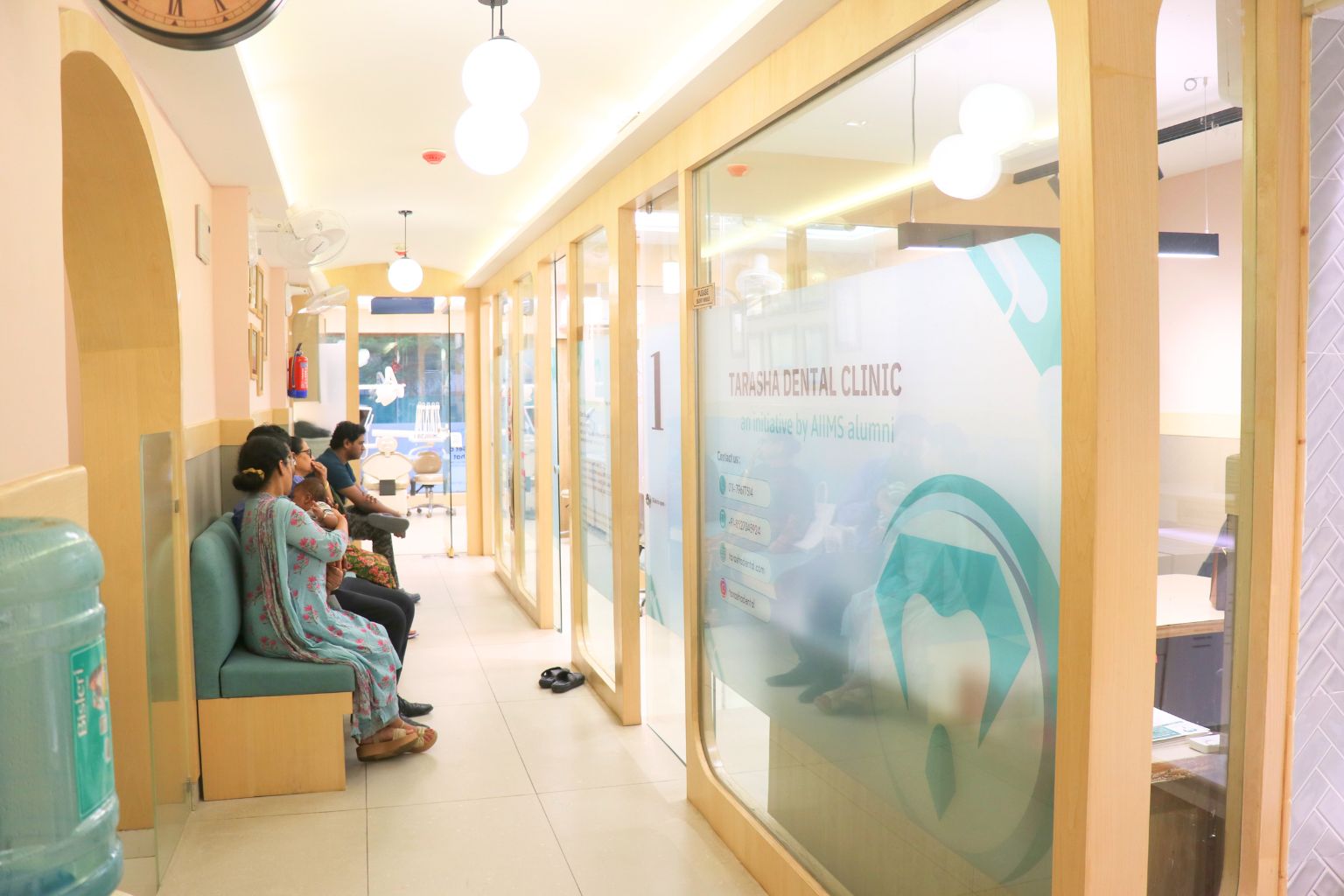
Child-Friendly Environment
Child-appropriate equipment, flavoured gels, child-paced communication, distraction tools, and a team trained to adapt its approach to each child’s age, anxiety, and behaviour at every visit.
Family-Centred Care
Parents are fully informed at every stage — before treatment, during, and at discharge. Written treatment plan. Written aftercare instructions. No surprises. No decisions made without consent.
International Standards
Treatment protocols follow ISPPD (Indian Society of Pedodontics) and IAPD (International Association of Paediatric Dentistry) guidelines. WHO-compliant sterilisation. Internationally validated materials and instruments.
International Patient Programme
Pre-travel WhatsApp review of X-rays and records. Cost estimates in USD, GBP, CAD, AED, or AUD. Treatment planned to fit your India visit window, including GA-based complete rehabilitation in one session. See international patients ↗.
Full Mouth Rehabilitation for Children in India —
Why International Families Choose Tarasha
Families from the USA, UK, Canada, UAE, Australia, and Singapore regularly bring their children for comprehensive dental rehabilitation at Tarasha during India family visits. The combination of AIIMS Alumni specialist expertise and 70–80% cost savings compared to USA/UK private rates — particularly for GA-based full rehabilitation sessions that can cost $12,000–$18,000 USD in the USA — makes Delhi a genuinely practical choice for families who were planning an India visit anyway.
India vs USA/UK Cost Comparison — Children’s Full Mouth Rehabilitation
| Component | India — Tarasha (approx.) | USA (approx.) | UK (approx.) |
|---|---|---|---|
| Paediatric Specialist Consultation | Significantly lower | $150–$300 | £80–£200 |
| Full Mouth Digital X-Rays (OPG + periapical) | Significantly lower | $150–$350 | £100–£250 |
| Composite Filling (per tooth) | Save 60–80% | $150–$400 | £100–£250 |
| Pulpotomy (per tooth) | Save 70–80% | $300–$700 | £200–£450 |
| Pulpectomy / Kids Root Canal (per tooth) | Save 70–80% | $400–$1,000 | £300–£600 |
| Stainless Steel Crown (per tooth) | Save 70–80% | $300–$600 | £200–£400 |
| Zirconia Crown / Child (per tooth) | Save 70–80% | $500–$1,200 | £350–£700 |
| GA Session (full rehabilitation in one sitting) | Save 80–90% | $8,000–$18,000 | £5,000–£12,000 |
| Typical Wait Time (India) | Days | 4–8 weeks | 8–18 weeks |
| Overall Savings | 50–80% | Depending on number of teeth and procedures | |
* India costs confirmed at your consultation. USA/UK figures based on published national average fee surveys. For full international patient information, see our international patients page ↗.
NRI or International Family?
WhatsApp Your Child’s Records for a Free Assessment.
Send your child’s dental X-rays, photographs, and a brief description of the dental problems. Dr. Anju will review the case and provide a treatment plan with cost estimates in USD, GBP, CAD, or AED within 24 hours — before you book flights.
Full Mouth Rehabilitation for Children
in the Heart of South Delhi
Families from Lajpat Nagar, Defence Colony, Amar Colony, South Extension, Jangpura, Greater Kailash, East of Kailash, Moolchand, Nehru Place, and across South Delhi and South-East Delhi trust Tarasha Dental Clinic for their children’s comprehensive dental rehabilitation. We are located at SCO 2&3, D-177, Railway Crossing, Lajpat Nagar I, New Delhi – 110024, accessible from Lajpat Nagar and Moolchand Metro Stations on the Delhi Metro Violet Line.
Recovery & Long-Term Care
After Full Mouth Rehabilitation
Immediately After Treatment
- Wait for anaesthesia to wear off before eating or drinking (1–2 hours). Numb areas can be accidentally bitten
- Soft foods for 24–48 hours after extensive treatment; avoid hard, sticky, or crunchy foods
- Mild tenderness for 2–5 days after pulpotomy/pulpectomy — managed with children’s paracetamol per Dr. Anju’s guidance
- Gentle brushing from the evening of treatment; normal oral hygiene from day 2
- Call us immediately if the child develops worsening pain, facial swelling, or a crown comes off
Long-Term Maintenance
- Brush twice daily with fluoride toothpaste — all restored teeth need the same care as natural teeth
- Limit sugary foods and drinks — the dietary habits that caused the original disease must change to prevent recurrence
- 6-monthly recall appointments at Tarasha for professional fluoride, check-up, and growth monitoring
- Follow-up X-ray at 3–6 months to verify healing and bone response around treated teeth
- Diet counselling continued at recall appointments to reinforce healthy habits
- Habit monitoring — any thumb sucking, mouth breathing, or grinding habits reviewed and managed at each recall
Quick Answers —
Full Mouth Rehabilitation for Children
What is Full Mouth Rehabilitation for Children?
A comprehensive, personalised dental treatment programme that addresses all dental problems across the full dentition in one coordinated plan — eliminating infection, relieving pain, restoring chewing and speech, and supporting healthy development. Includes fillings, root canal treatment, crowns, space maintainers, and preventive care.
Why might a child need Full Mouth Rehabilitation?
Multiple cavities, several infected teeth, dental trauma affecting multiple teeth, developmental enamel defects, congenital dental conditions, or children with special healthcare needs who have accumulated extensive dental disease. When more than 4–5 teeth need treatment simultaneously, comprehensive rehabilitation is more efficient and clinically superior to piecemeal single-tooth visits.
Can Full Mouth Rehabilitation be done under General Anaesthesia?
Yes — when clinically appropriate for very young children, high dental anxiety, special healthcare needs, or extensive multi-tooth treatment. All treatment is completed safely in one session. Assessed and recommended only after a comprehensive pre-operative evaluation, not as a convenience measure.
Is Full Mouth Rehabilitation safe for children?
Yes. All procedures — fillings, root canal treatments, crowns, extractions — are well-established, evidence-based paediatric dental procedures. General Anaesthesia, when recommended, is administered by a separate qualified paediatric anaesthesiologist with full monitoring throughout. Treatment is planned by an MDS Paediatric Dentistry specialist.
Can baby teeth be saved during Full Mouth Rehabilitation?
Yes — this is a core philosophy at Tarasha. Preservation of natural primary teeth through pulpotomy, pulpectomy, and crown placement is always prioritised over extraction. Baby teeth hold space for permanent successors, support chewing and speech, and should be maintained until natural exfoliation where clinically possible.
Why do international families choose India for children’s dental rehabilitation?
AIIMS Alumni paediatric specialists, 70–80% cost savings vs USA/UK, English-speaking care, appointments within days, and the ability to complete GA-based full rehabilitation in one visit during an India family trip. A GA-based full rehabilitation session costing $8,000–$18,000 in the USA can be completed here at 80–90% lower cost.
Frequently Asked Questions —
Full Mouth Rehabilitation for Children
-
Full Mouth Rehabilitation for Children is a comprehensive, personalised dental treatment programme that addresses all dental problems across a child's full dentition in one coordinated plan. It eliminates infection and pain, restores chewing ability, improves speech, and supports healthy dental development. It may include fillings, pulpotomy, pulpectomy (root canal), stainless steel or zirconia crowns, extractions when necessary, space maintainers, fluoride therapy, sealants, and preventive care.
-
Yes. All component procedures — fillings, root canal treatments, crowns, and extractions — are well-established, evidence-based paediatric dental procedures. When General Anaesthesia is recommended, it is administered by a separate qualified paediatric anaesthesiologist with full continuous monitoring throughout. Treatment is planned and delivered by an MDS Paediatric Dentistry specialist.
-
Yes — when treatment is delivered under General Anaesthesia through our Kid Smile in One Day programme. All required fillings, root canal treatments, crowns, extractions, and space maintainers can be completed in a single GA session. Under local anaesthesia or conscious sedation, treatment is spread across 2–4 visits depending on treatment volume and the child's cooperation.
-
No. GA is recommended only when clinically indicated — for very young children (under 3), children with high dental anxiety, special healthcare needs, or very extensive treatment needs that cannot be safely completed under local anaesthesia alone. Most school-age children complete rehabilitation under local anaesthesia with appropriate behaviour management across 2–4 visits. Conscious sedation is available as an intermediate option.
-
Baby teeth are saved wherever possible through pulpotomy, pulpectomy, and crown placement. Extraction is recommended only when a tooth is structurally non-restorable, has caused significant bone loss, or when the permanent successor is ready to erupt soon. Preserving primary teeth maintains space for permanent successors, supports chewing, speech, and jaw development.
-
Treatments included depend on each child's clinical findings but typically involve: dental fillings, pulpotomy (partial root canal), pulpectomy (complete root canal), stainless steel crowns, zirconia crowns, extractions when non-restorable, space maintainers after early tooth loss, fluoride therapy, pit and fissure sealants, preventive care, habit counselling, and oral hygiene education for the child and parents.
-
Not during treatment — all procedures are performed under local anaesthesia (child feels pressure but no pain). Mild tenderness for 1–3 days after root canal treatment or extractions is normal and managed with children's paracetamol. Most children are back to normal school and activities the next day. Children who have undergone Full Mouth Rehabilitation are typically significantly more comfortable after treatment than before, as the source of dental pain has been eliminated.
-
After individual treatment sessions: 1–2 days of mild tenderness, with normal activity from the next day. After a GA session: the child is typically comfortable and eating normally within 24–48 hours. Follow-up clinical review at 4–6 weeks; digital X-ray review at 3–6 months to verify healing.
-
AIIMS MDS Paediatric Dentistry training involves high-volume complex child dental cases including behaviour management of anxious and resistant children, special needs dentistry, GA-based rehabilitation, and advanced paediatric endodontics — a depth of clinical exposure that few private institutions match. This training is essential for managing the clinical complexity and child management demands of Full Mouth Rehabilitation across multiple teeth in one programme.
-
Tarasha Dental Clinic, SCO 2&3, D-177, Railway Crossing, Lajpat Nagar I, New Delhi – 110024. Led by Dr. Anju Singh Rajwar, MDS Paediatric Dentistry, Senior Residency AIIMS New Delhi. An AIIMS Alumni initiative. Mon–Sat, 10:30am–8pm. +91 96259 52590. Serving families from Lajpat Nagar, Defence Colony, Amar Colony, Jangpura, South Extension, Greater Kailash, East of Kailash, Moolchand, and Nehru Place.
-
Full Mouth Rehabilitation can be performed at any age from when the first teeth erupt. Very young children (under 3) who cannot cooperate for extensive treatment under local anaesthesia alone are managed under GA. School-age children (3–12) typically complete treatment under local anaesthesia with behaviour management. Treatment planning is adapted to the child's age, cooperation, and specific dental findings.
-
The Kid Smile in One Day programme is Tarasha's comprehensive GA-based paediatric dental rehabilitation programme for children who need extensive treatment completed in a single session. All required root canals, crowns, fillings, extractions, and space maintainers are completed under general anaesthesia with a separate qualified paediatric anaesthesiologist throughout. Particularly suitable for NRI families visiting India for a limited period, or children with special healthcare needs.
-
Yes. Dental anxiety in children is common and is managed through a structured approach. Most anxious children respond well to behaviour management techniques under local anaesthesia when working with a trained paediatric specialist. For higher anxiety or pre-cooperative children, conscious sedation (oral or nitrous oxide) is available. For severe anxiety or very young children, GA-based rehabilitation in one session eliminates the need for cooperation entirely.
-
When performed correctly, Full Mouth Rehabilitation protects permanent teeth rather than affecting them negatively. Treating infected primary teeth eliminates bacterial infection that would otherwise damage permanent tooth buds developing beneath. Pulpectomy uses resorbable root filling materials that resorb naturally with the primary tooth root, without interfering with permanent tooth eruption. Space maintainers after early extractions protect permanent tooth positions.
-
Yes. Tarasha regularly treats children of NRI families from USA, UK, Canada, UAE, and Australia. Pre-travel WhatsApp consultation allows Dr. Anju to review existing X-rays, plan treatment, and provide cost estimates in USD/GBP/CAD/AED before flights are booked. For extensive treatment, the Kid Smile GA programme completes all dental needs in a single session during the India visit. Contact: +91 96259 52590.
-
The complete treatment plan is explained to parents in clear, non-technical language before any treatment begins. A written, tooth-by-tooth treatment plan with procedures, expected outcomes, and confirmed costs is provided. All questions are answered. Written consent is obtained for each treatment phase. At Tarasha, there are no surprises and no decisions made without the parents' full understanding and agreement.
-
A preventive maintenance programme begins immediately after rehabilitation. Six-monthly recall appointments for professional fluoride application, clinical check-up, and growth monitoring. Dietary and oral hygiene counselling continues at every recall. The goal is to ensure the child maintains the restored oral health and never requires comprehensive rehabilitation again — building lifelong healthy dental habits from the point of rehabilitation onward.
-
Regular dental treatment addresses one tooth at a time, typically reactively when pain occurs. Full Mouth Rehabilitation is a proactive, comprehensive approach: all dental problems are identified through systematic examination, a complete treatment plan is developed, and all problems are treated in a coordinated, correctly sequenced programme. This is more efficient, clinically superior, and significantly reduces the number of painful dental emergencies the child experiences going forward.
-
A clinical examination and full mouth digital X-ray assessment determines this. Broadly: if 4 or more teeth have active disease (cavities, infection, or structural damage) affecting the child's ability to eat, sleep, or function normally, a comprehensive programme is typically more appropriate than piecemeal single-tooth visits. Dr. Anju assesses this at the first consultation and provides a clear, honest recommendation based on the clinical findings.
-
Call or WhatsApp +91 96259 52590, or book online at tarashadental.com/contact-dental-clinic-delhi/. Tarasha Dental Clinic is open Monday to Saturday, 10:30am to 8:00pm. Located at SCO 2&3, D-177, Railway Crossing, Lajpat Nagar I, New Delhi – 110024, near Lajpat Nagar and Moolchand Metro Stations. For international and NRI families: WhatsApp your child's X-rays for a free pre-travel assessment.
Comprehensive Paediatric Dental Care
Begins with One Consultation.
If your child has multiple cavities, dental infections, broken teeth, or requires extensive treatment, early intervention can restore their oral health, comfort, and confidence — avoiding the accumulating damage of untreated dental disease.
Schedule a consultation with the AIIMS Alumni-led paediatric dental team at Tarasha Dental Clinic for a personalised Full Mouth Rehabilitation plan designed specifically for your child’s needs.
Tarasha Dental Clinic · An Initiative by AIIMS Alumni
SCO 2&3, D-177, Railway Crossing, Lajpat Nagar I, New Delhi – 110024
Mon – Sat: 10:30 am – 8:00 pm · +91 96259 52590
Kids Dentistry ↗
·
Kids Root Canal ↗
·
Kid Smile GA Programme ↗
·
International Patients ↗