Tarasha Dental Clinic: Best Dental Services in Lajpat Nagar

- Home
- About
-
Treatments
CosmeticImplants & Restorative
- Our Doctors
- Blogs
- Gallery
- Contact
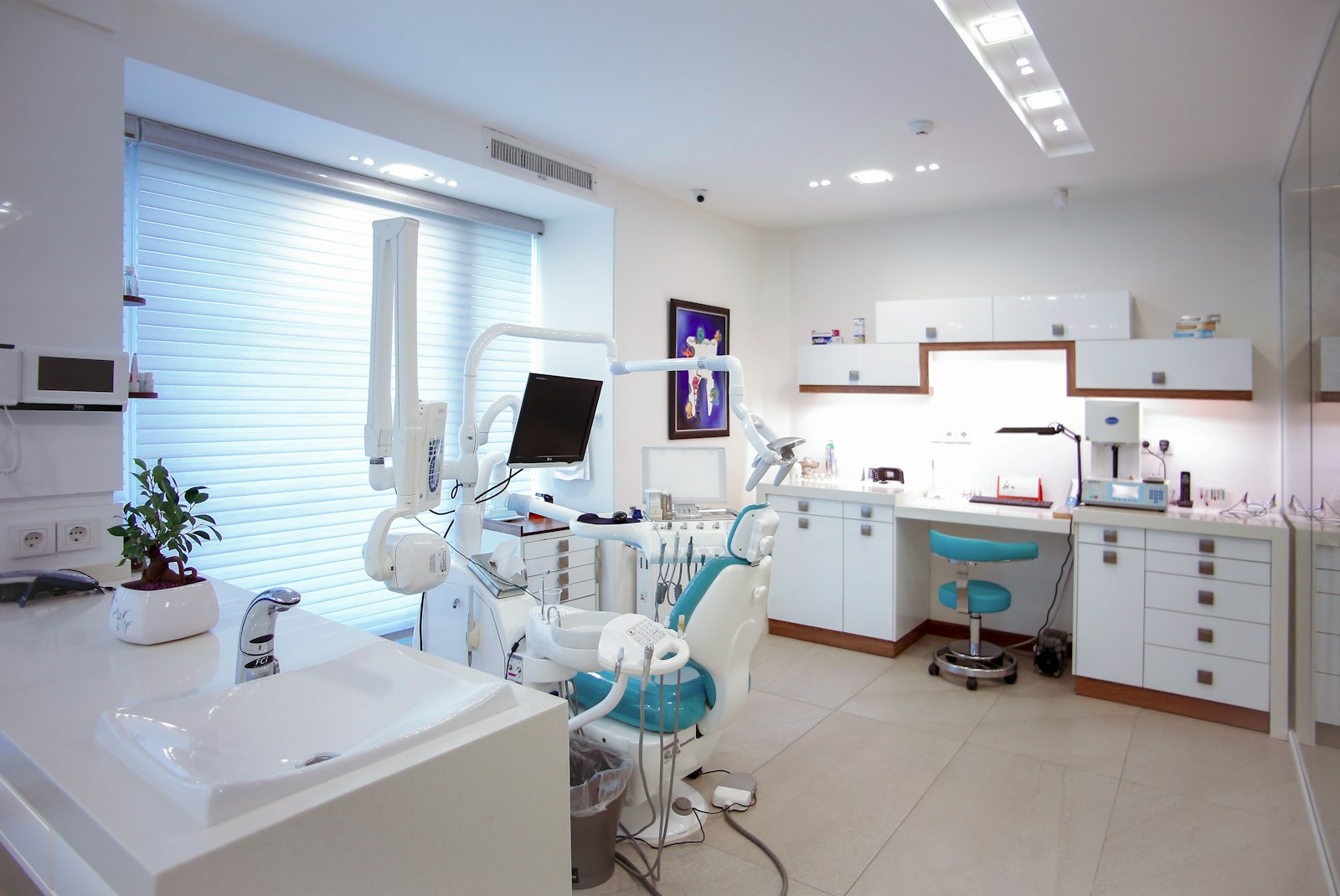
Is Dental Treatment in India Safe
for Foreign Patients?
An honest, detailed answer to the most important question every international patient asks before booking — covering sterilisation standards, credential verification, material quality, and a 15-point checklist you can use to evaluate any dental clinic in India.
This is the most important question any foreign patient should ask before seeking dental treatment in India — and it deserves a direct, honest answer rather than a reassuring one designed to move you toward booking an appointment.
The straightforward answer is: it depends entirely on the clinic you choose. India has some outstanding dental facilities — particularly those led by post-graduate specialists trained at institutions like AIIMS — and some that fall well short of international standards. The country itself is not the variable. The clinic is.
This guide helps you understand what clinical safety actually requires, how to evaluate any Indian dental clinic against an objective standard, and what the specific differences are between a high-quality specialist clinic in India and the dental facilities you may be accustomed to in the USA, UK, Canada, UAE, or Australia. By the end, you should have a clear, evidence-based picture rather than a marketing answer.
Is Dental Treatment in India Safe for Foreign Patients?
Dental treatment in India is safe at properly accredited, specialist-led clinics — but not universally across all facilities. Safety depends on the same factors that determine quality anywhere: the dentist’s specialist training and credentials, sterilisation protocols (Class B autoclave, WHO-compliant), the materials and implant systems used, and diagnostic technology. At AIIMS Alumni-led clinics, clinical protocols match international standards. Foreign patients should verify dentist credentials, sterilisation practices, and materials before committing to treatment.
Why “Is India Safe?” Is
the Wrong Question to Ask
When patients from the USA, UK, or Canada ask whether dental treatment in India is safe, they are often making an implicit assumption — that there is something uniform about “dental treatment in India” that they are evaluating. There isn’t.
India has approximately 300,000 registered dentists and roughly 60,000 dental clinics across the country. They range from single-practitioner general practices with basic equipment to multi-specialty clinics with AIIMS-trained MDS specialists, CBCT imaging, and Class B autoclaves — clinics that, on any objective clinical measure, compare favourably to specialist dental practices in London, New York, or Toronto.
The right question is not “is India safe?” — it is “is this specific clinic safe, and how do I verify that?” That is the question this guide answers.
High-Quality Clinics
AIIMS or equivalent MDS-trained specialists, Class B autoclaves, international implant systems, CBCT imaging, WHO-compliant infection control, structured pre-operative protocols. Clinically equivalent to leading practices in USA/UK/Canada.
Mid-Range Clinics
BDS-qualified general practitioners, basic sterilisation, standard X-rays. Adequate for simple procedures. Insufficient depth for complex implant cases, GA treatment, or full mouth rehabilitation.
Below-Standard Clinics
Poor sterilisation practices, unqualified operators, no pre-operative assessment, generic materials. These exist and are a legitimate concern — which is why verification before travel is essential, not optional.
What Clinical Safety
Actually Requires
Clinical safety in dentistry — anywhere in the world — is not determined by geography, price, or marketing claims. It is determined by four specific, measurable factors.
1. Practitioner Qualifications and Specialist Training
In India, a BDS (Bachelor of Dental Surgery) qualifies a dentist to practice general dentistry. An MDS (Master of Dental Surgery) is a post-graduate specialist qualification in a specific discipline — implants, root canals, orthodontics, paediatric dentistry, periodontics — representing 3 additional years of specialist clinical training. Complex procedures should be performed by MDS specialists, not general practitioners, regardless of what country you are in. This is as true in London or New York as it is in Delhi.
The institution where training was completed also matters. AIIMS New Delhi is India’s most prestigious medical institution — the closest equivalent to a top US academic medical center. Its MDS graduates have completed post-graduate training in high-volume, complex clinical environments that most private dental schools cannot replicate.
2. Sterilisation and Infection Control Standards
The gold standard for dental instrument sterilisation is a Class B autoclave — a vacuum-cycle sterilisation unit that achieves complete sterilisation of hollow, wrapped, and porous instruments. This is the same standard required in the USA, UK, and EU for accredited dental practices. A Class B autoclave, properly used with documented cycles, should be present in any dental clinic treating surgical cases.
The WHO infection prevention guidelines specify surface decontamination between patients, personal protective equipment, waste management, and hand hygiene protocols that a reputable clinic follows as a baseline — not a premium feature. Ask to see the sterilisation room. A clinic that welcomes this request is giving you important information.
3. Material and Implant System Quality
Dental implant systems are not generic. The most clinically validated systems — Straumann (Switzerland) and Nobel Biocare (Sweden) — have decades of peer-reviewed long-term data supporting their survival rates. These are the same systems used at specialist implant clinics in New York, London, and Sydney. A clinic offering implants at significantly below-market rates may be using unvalidated generic systems with limited evidence base and uncertain long-term outcomes.
The same principle applies to crown materials (zirconia vs PMMA vs metal-ceramic), aligner systems, and endodontic instruments. Ask specifically which implant system is used and verify it is an internationally recognised brand before committing to treatment.
4. Diagnostic Technology and Treatment Planning
A surgical procedure is only as good as the planning that precedes it. Digital periapical X-rays, CBCT 3D imaging for implant planning, and intraoral digital scanners are not luxury extras — they are the diagnostic baseline for specialist-level care. Clinics that plan implant surgery from conventional 2D X-rays alone, or that do not perform pre-operative assessment before GA or sedation procedures, are operating below an acceptable clinical standard.
India vs USA / UK / Canada:
Dental Safety Standards Compared
This is not a claim that every Indian dental clinic meets international standards — it is a comparison of what an accredited, AIIMS Alumni-led specialist clinic in India follows, against the standards foreign patients expect at home. The conclusion is consistent across all criteria: the clinical protocols are equivalent. The cost is not.
| Safety Standard | AIIMS-Led Clinics (India) | USA (ADA Accredited) | UK (CQC Registered) |
|---|---|---|---|
| MDS / Board-Certified Specialist | Yes — AIIMS MDS | Yes — Board-certified | Yes — GDC specialist |
| Class B Autoclave Sterilisation | Yes | Yes | Yes — CQC requirement |
| WHO Infection Control Protocols | Yes | Yes | Yes |
| International Implant Systems (Straumann/Nobel) | Yes | Yes | Yes |
| Digital X-Rays (Periapical + OPG) | Yes | Yes | Yes |
| CBCT 3D Planning for Implants | Yes | Yes (most practices) | Yes (specialist centres) |
| Pre-Operative Assessment for GA/Sedation | Yes — mandatory | Yes — mandatory | Yes — mandatory |
| Separate Anaesthesiologist for GA | Yes | Yes | Yes |
| English-Speaking Clinical Team | Yes (specialist clinics) | Yes | Yes |
| Written Treatment Plan Before Starting | Yes | Yes | Yes |
| Cost vs Single Dental Implant | $300–$600 USD equiv. | $3,000–$5,000 USD | £2,500–£4,500 |
Why Is Dental Treatment in India So Much Cheaper If the Standards Are the Same?
Lower operational costs, lower staff salaries relative to local living costs, lower facility costs, and a different healthcare economy — not a difference in the clinical standard of care delivered. The dentist performing your implant surgery in Delhi has completed the same specialist post-graduate training as the one in New York. The implant they place is the same Straumann system. The cost difference is structural, not clinical.
What Safety Looks Like
in Practice at Tarasha
Tarasha Dental Clinic is an initiative by AIIMS Alumni in Lajpat Nagar, South Delhi. The founding principle was straightforward: to build a clinic where the clinical protocols are driven by the same evidence-based, patient-ethical culture that AIIMS graduates carry from their training — not by commercial pressure or patient throughput.
- All specialist dentists hold MDS post-graduate degrees, including from AIIMS New Delhi — India’s most rigorously accredited medical institution
- Class B autoclave sterilisation for all instruments, with documented cycles and surface disinfection between every patient
- Straumann and Nobel Biocare implant systems — the same brands used at leading specialist implant clinics in New York, London, and Sydney
- CBCT 3D imaging for implant planning, plus digital periapical X-rays and intraoral scanning — full digital diagnostic capability
- Dedicated paediatric anaesthesiologist for all GA cases — separate from the dental team, with independent clinical authority to postpone any case where the pre-operative assessment raises concern
- Written, itemised treatment plan before any treatment begins, with costs confirmed before you commit to travel or appointments
We are also aware that these are claims, not evidence. The appropriate response to any clinic’s safety claims — including ours — is to verify them. The checklist in the next section tells you exactly how.
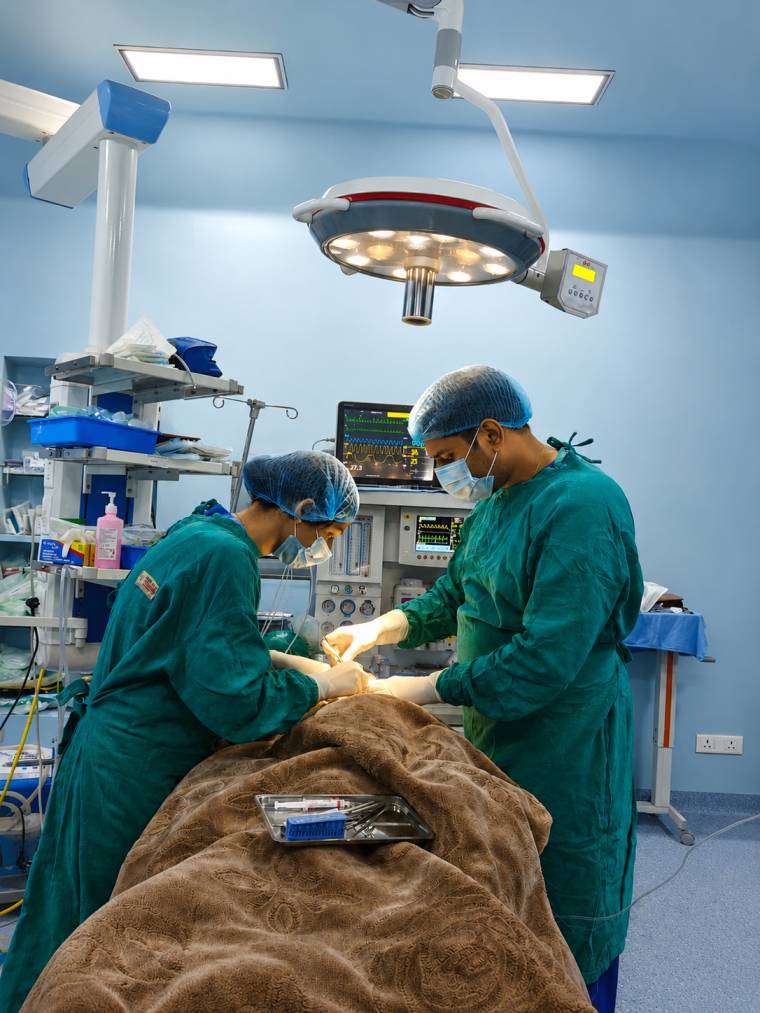
The 15-Point Checklist:
How to Verify Any Indian Dental Clinic Before You Travel
Use this checklist with any clinic you are considering — including Tarasha. A clinic that welcomes these questions is already demonstrating a level of transparency that itself is a significant trust signal. A clinic that deflects or gives vague answers to direct clinical questions should be reconsidered.
15-Point India Dental Safety Checklist
Save this. Share it. Ask these questions before you book flights.
- Qualifications: Is the treating dentist an MDS specialist in the relevant discipline (implants, root canals, paediatric dentistry, periodontics)? Where did they complete their post-graduate training?
- Sterilisation: Does the clinic use a Class B autoclave? Are instruments sterilised in documented cycles? Is sterilisation performed between every patient?
- Implant System: Which implant brand is used? Is it an internationally validated system (Straumann, Nobel Biocare, Osstem, etc.) with published long-term data?
- Infection Control: Does the clinic follow WHO-aligned infection control protocols? Are surfaces disinfected between patients?
- Diagnostic Imaging: Are digital periapical X-rays and CBCT 3D scanning available for implant planning?
- GA Anaesthesiologist: (If GA is involved) Is a dedicated medical anaesthesiologist separate from the dental team present throughout? What are their qualifications?
- Pre-Operative Assessment: Is a full medical history and pre-operative assessment completed before any surgical or sedation procedure?
- English Communication: Does the clinical team communicate clearly in English? Are treatment plans, consent forms, and invoices provided in English?
- Written Treatment Plan: Will you receive an itemised written treatment plan with procedure-wise costs before any treatment begins?
- Credential Verification: Is the dentist registered with the Dental Council of India (DCI)? Can registration be verified?
- Post-Treatment Records: Will you receive complete digital treatment records, X-rays, and material specifications for your home dentist after treatment?
- Follow-Up Access: What follow-up access is available after you return home if you have concerns or complications?
- Reviews — Quality Over Quantity: Are patient reviews specific and detailed (not generic), and do they mention the treating doctor by name?
- Case Selection Honesty: Has the clinic ever told a patient their case was not suitable for their clinic, or recommended a less complex treatment than the maximum revenue option?
- Emergency Protocol: What is the clinic’s escalation plan if a medical emergency arises during treatment? Which hospital do they work with?
Red Flags: When to Walk Away
These are not minor concerns. Any of the following should prompt you to reconsider a clinic, regardless of price or convenience.
- Reluctance to answer direct questions about sterilisation or qualifications
- Cannot confirm which implant system they use, or names an unrecognised brand
- No pre-operative assessment before GA or surgical procedures
- Treatment begins without a written plan or cost discussion
- Reviews are generic, repetitive, or suspiciously recent (a cluster of 5-star reviews within a short window)
- No mechanism for post-treatment follow-up after you return home
- Implant costs significantly below market without explanation — implant system cost alone has a floor; below that floor, something has been substituted
- Pressure to commit to treatment without adequate time to consider alternatives
How to Verify a Dentist’s
Credentials in India
You do not have to take a clinic’s credentials on faith. Here is how to independently verify the qualifications of any dentist in India before you travel.
DCI Registration Check
The Dental Council of India (DCI) maintains the national register of qualified dentists. Any practising dentist must be registered. You can request their DCI registration number and verify it on the DCI website.
AIIMS Verification
AIIMS New Delhi credentials are independently verifiable. An MDS from AIIMS is a post-graduate specialist degree, distinct from a general BDS. You can ask for a copy of the degree certificate and verify it against the AIIMS academic records system.
Google Business Profile Reviews
Read verified Google reviews carefully. Look for reviews that mention the treating doctor by name, describe the procedure specifically, and are spread over time — not clustered. Low-quality generic reviews (“Great service!”) provide less signal than one specific, detailed patient account.
Pre-Travel Video Consultation
A Zoom or WhatsApp video consultation with the treating specialist before you travel is not just a convenience — it is a verification tool. It allows you to assess their communication, clinical reasoning, and willingness to answer direct questions before you commit to a flight.
Safety by Treatment Type:
What to Specifically Verify
Dental Implants
Implant surgery is the highest-stakes procedure most dental tourists seek in India — and the one where the quality gap between clinics is widest. Critical verification points: the implant system brand, whether CBCT planning is performed before surgery (not during), the prosthodontist’s MDS qualification, and the sterilisation protocol for surgical instruments. See our detailed dental implants guide for more.
Root Canal Treatment
An endodontist-performed root canal using rotary endodontic systems and digital X-ray guidance is clinically equivalent to what you would receive at a specialist endodontic practice anywhere in the world. Verify: rotary endodontic systems are used (not hand filing alone), the endodontist holds an MDS qualification, and digital periapical X-rays confirm completion before crown placement.
Paediatric Dental Treatment Under GA
Children’s dental treatment under general anaesthesia requires the highest standard of verification. The critical questions: who administers the anaesthesia (must be a separate qualified medical anaesthesiologist, not the dentist), what monitoring equipment is used (SpO², ECG, capnography, BP, temperature — all must be present), and what is the emergency escalation protocol. For a detailed, parent-specific answer to this question, read our guide: Is GA Safe for Kids Dental Treatment in India?
Cosmetic Dentistry (Veneers, Smile Makeovers)
Cosmetic outcomes depend significantly on the materials used and the quality of dental laboratory work. Verify that porcelain or zirconia (not acrylic or low-grade ceramic) is used for permanent veneers, that digital smile design software is used for pre-treatment planning, and that the cosmetic dentist has specific training in aesthetic dentistry beyond a general BDS qualification.
What USA, UK & Canadian
Patients Are Actually Asking
Patients from these countries are often accustomed to strong regulatory frameworks for dental practice: the ADA in the USA, the GDC (General Dental Council) in the UK, and provincial dental colleges in Canada. The underlying concern is whether India has equivalent oversight.
India has the Dental Council of India (DCI), which regulates dental education, registration, and practice standards nationally. Every practising dentist must be DCI registered. State dental councils provide additional local oversight. The regulatory framework exists — the variability in the market is a consequence of enforcement challenges in a very large country with a large number of practitioners, which is not unique to India.
The practical implication for foreign patients is the same conclusion as the rest of this guide: the regulatory framework provides a baseline, but you are selecting a specific clinic, not a country. A DCI-registered, AIIMS-trained MDS specialist in a well-equipped clinic in Delhi is operating under the same professional and ethical obligations as an ADA member in New York — and in many cases, with comparable or superior specialist training depth.

How Tarasha Dental Clinic
Addresses Every Point on the Checklist
We are writing this guide and sharing this checklist because we believe patients deserve to evaluate us against an objective standard — not simply accept our safety claims because we have made them on our own website. Here is how Tarasha Dental Clinic addresses each category in our 15-point checklist.
Qualifications
Dr. Anju Singh Rajwar, our founder and paediatric specialist, completed both her MDS and Senior Residency at AIIMS New Delhi. Our specialist team holds MDS qualifications across Prosthodontics, Endodontics, Periodontics, Paediatric Dentistry, and Oral Surgery. All are DCI registered.
Sterilisation
Class B autoclave sterilisation with documented cycles. WHO-compliant surface disinfection protocol. Barrier protection changed between every patient. Single-use items used where indicated.
Implant Systems
Straumann, Nobel Biocare, and other internationally validated implant systems. We do not use unvalidated generic implants regardless of the margin difference.
Diagnostics
Digital periapical X-rays, OPG, CBCT 3D scanning for all implant and complex surgical cases. Intraoral digital scanning. Digital smile design.
GA Safety
Separate, qualified paediatric anaesthesiologist for all GA cases. Full continuous monitoring (SpO², ECG, capnography, BP, temperature). Pre-operative assessment mandatory. See our detailed GA safety guide.
Transparency
Every patient receives a written, itemised treatment plan with costs before treatment begins. No treatment starts without informed consent. Honest recommendations — including when a case is not suitable for our clinic or when a simpler treatment genuinely meets the clinical need better.
Post-Treatment Support
Complete digital records, X-rays, and material specifications are provided for your home dentist. WhatsApp follow-up access for 30 days after return. We can also arrange a written clinical handover letter for patients who prefer to involve their local practitioner in the care plan.
Patients from the USA, UK, Canada, UAE, and Australia who choose to explore dental treatment in India are making a rational decision based on cost, quality, and logistics — not a compromise. The question “is India safe?” deserves the honest answer this guide has provided: at AIIMS Alumni-led specialist clinics in South Delhi, the clinical standard is comparable to what you would receive at a specialist dental practice in your home country. The cost is not.
For patients in Delhi’s Lajpat Nagar or visiting from across South Delhi — Defence Colony, Amar Colony, Jangpura, South Extension, Greater Kailash — the same standards apply to every patient, local or international. There is no separate “tourist standard” at Tarasha. Our international patient programme is built around the same clinical protocols we use for every patient we see.
Quick Answers for
Dental Safety in India
Is dental treatment in India safe?
At accredited, AIIMS Alumni-led specialist clinics — yes. The protocols for sterilisation, materials, and diagnostic planning match international standards. Not all clinics in India reach this standard; verification before travel is essential.
How do dental standards in India compare to the USA?
At AIIMS-trained specialist clinics: clinically equivalent. Same Class B sterilisation, same international implant systems, same diagnostic technology. Cost difference reflects operational economics, not clinical standard.
What sterilisation standards do Indian dental clinics use?
Accredited clinics use Class B autoclave sterilisation and WHO-compliant infection control protocols — the same standard required in the USA, UK, and EU. Always ask to see the sterilisation room and verify the autoclave class.
Are dental implants safe in India?
Yes, at AIIMS-trained implantologist clinics using validated systems (Straumann, Nobel Biocare). Ask specifically which implant brand is used and request CBCT planning documentation before committing.
How do I verify a dentist’s credentials in India?
Check DCI registration (Dental Council of India), ask for MDS qualification details and institution, verify AIIMS credentials via aiims.edu, and request a video consultation before travel.
What is AIIMS and why does it matter?
AIIMS (All India Institute of Medical Sciences) is India’s most prestigious medical institution. MDS graduates from AIIMS have completed specialist post-graduate training equivalent to board-certified specialists in the USA or GDC specialists in the UK.
Frequently Asked Questions
Is Dental Treatment in India Safe?
-
At properly accredited, specialist-led clinics — yes. Safety depends on the same factors that determine quality anywhere: specialist credentials (MDS from a recognised institution), Class B autoclave sterilisation, internationally validated materials, and proper diagnostic planning. At AIIMS Alumni-led clinics, these protocols match international standards. The critical step is verifying the specific clinic before travel.
-
At accredited, AIIMS-trained specialist clinics: clinically equivalent. The same Class B autoclave sterilisation, internationally recognised implant systems (Straumann, Nobel Biocare), diagnostic technology (CBCT, digital X-rays), and specialist-level post-graduate qualifications are present. The cost difference reflects lower operational costs in India, not a lower clinical standard.
-
Accredited clinics use Class B autoclave sterilisation (the same standard required in the USA, UK, and EU) and WHO-compliant infection control protocols including surface disinfection between patients, barrier protection, and proper waste management. You should ask to see the sterilisation room and verify the autoclave type before treatment.
-
At quality clinics — yes. Internationally recognised implant systems like Straumann and Nobel Biocare, the same zirconia and porcelain crown materials, and clinically validated endodontic and orthodontic products are available in India. Some lower-end clinics use unvalidated generic implant systems; always ask specifically which brand is used and verify it is internationally recognised.
-
Yes, at AIIMS-trained implantologist clinics using validated systems with CBCT-guided surgical planning. Key verification points: the implant brand (must be internationally validated), the surgeon's MDS Prosthodontics or Implantology qualification, pre-operative CBCT planning, and WHO-compliant sterilisation. Implants at significantly below-market pricing without explanation may involve unvalidated generic systems.
-
Use the 15-point checklist in this article. Key items: MDS specialist qualification in the relevant discipline, Class B autoclave sterilisation, internationally validated implant system, CBCT imaging for surgical planning, separate anaesthesiologist for GA cases, written treatment plan before starting, DCI registration verification, and pre-travel video consultation with the treating specialist.
-
At specialist clinics serving international patients — yes. English is the medium of medical education in India, and MDS-trained specialist dentists communicate professionally in English. Treatment plans, consent forms, invoices, and post-treatment records are provided in English. A pre-travel video consultation will confirm the language comfort level of the treating team before you commit.
-
AIIMS (All India Institute of Medical Sciences) New Delhi is India's most prestigious medical institution — the closest equivalent to Johns Hopkins, Mass General, or the UK's teaching hospital system. Its MDS post-graduate dental programme is among the most rigorous in India, involving high-volume complex case exposure that most private dental colleges cannot replicate. AIIMS credentials are independently verifiable via aiims.edu.
-
Check DCI (Dental Council of India) registration — every practising dentist must be registered. Ask for the MDS qualification certificate and the institution's name. AIIMS credentials can be verified via aiims.edu. Request a pre-travel video consultation to assess clinical communication and ask direct questions about training. Detailed, specific patient reviews mentioning the treating doctor by name are also a useful signal.
-
At AIIMS-trained specialist clinics with a dedicated paediatric anaesthesiologist — yes. The same protocols followed at paediatric hospitals in the USA and UK apply: separate qualified anaesthesiologist, continuous monitoring (SpO₂, ECG, capnography, BP, temperature), pre-operative assessment, and hospital-affiliated emergency readiness. For a detailed answer, see our full guide: Is GA Safe for Kids Dental Treatment in India?
-
The Dental Council of India (DCI) is the statutory regulatory body that oversees dental education, registration, and professional conduct in India — broadly equivalent to the ADA in the USA or the GDC in the UK. All practising dentists must be DCI registered. DCI registration can be verified via dciindia.org.in.
-
Lower operational costs (facility rent, staff salaries relative to local cost of living), lower equipment import costs at scale, and a different healthcare economy — not lower clinical quality. The dentist performing your implant in Delhi has the same specialist training as the one in New York. The Straumann implant placed is the same implant. The cost of the dentist's mortgage and the clinic's rent are not the same.
-
Use the same critical assessment you would apply to any online review. Signals of authenticity: reviews that name the treating doctor, describe the specific procedure, are spread over years (not clustered in a recent burst), and include specific observations rather than generic praise. Google verified reviews are more reliable than those on a clinic's own website.
-
At Tarasha, patients receive complete digital treatment records, material specifications, and X-rays at discharge — enabling your home dentist to manage any follow-up care with full clinical information. WhatsApp access for 30 days post-return allows direct clinical questions. For implant complications specifically, your home clinic can contact us directly for records. Ask any clinic you consider what their post-return support protocol is before you travel.
-
Dental practice in India is regulated by the Dental Council of India and state dental councils. Medical tourism broadly falls under the Ministry of Tourism and Ministry of Health frameworks. The regulatory baseline exists; the practical variability in quality across the large number of providers means patient-level due diligence remains the most reliable safety tool — hence the 15-point checklist in this article.
We Welcome Every Question
on This Checklist.
The 15-point checklist in this guide applies to Tarasha as much as to any other clinic. WhatsApp us your checklist questions. Ask about our sterilisation protocols. Request a video consultation with the treating specialist. Ask about the implant system. Ask about the anaesthesiologist for GA cases. We expect these questions, we prepare for them, and our answers are verifiable.
For NRI and international patients ready to move forward: our international patient programme ↗ covers everything from your first WhatsApp through to flying home with complete records.
Tarasha Dental Clinic · An Initiative by AIIMS Alumni
SCO 2&3, D-177, Railway Crossing, Lajpat Nagar I, New Delhi – 110024
Mon – Sat: 10:30 am – 8:00 pm · +91 96259 52590 · tarashadental.com