Dental Implants in Delhi: AIIMS-Trained Implant Specialists for a Natural, Confident Smile
Reviewed by Dr. Anju Singh Rajwar — BDS, MDS, Senior Residency at AIIMS New Delhi · Founder & Director
Losing a tooth can affect much more than your appearance. Missing teeth can make chewing difficult, change the way you speak, affect your confidence, and over time may contribute to changes in the surrounding teeth and jawbone. Fortunately, modern dental implants in Delhi offer a reliable and natural-looking way to replace missing teeth and restore both function and confidence.
At Tarasha Dental Clinic in Lajpat Nagar, New Delhi, implant treatment is focused on careful diagnosis, personalized treatment planning, advanced dentistry, and transparent communication. With AIIMS-trained implant specialists and advanced implant systems such as Nobel Biocare and Straumann, patients can receive individually planned solutions based on their dental condition, bone health, lifestyle, and expectations.
If you are searching for a dental implant dentist in Delhi, understanding how implants work, who they are suitable for, what the procedure involves, and how to choose the right implant clinic can help you make a more informed decision.
Quick Answer
A dental implant is a small biocompatible fixture placed into the jawbone to replace a missing tooth root, topped with an abutment and a natural-looking crown. At Tarasha Dental, Lajpat Nagar, implants are planned case-by-case by AIIMS-trained specialists using Nobel Biocare and Straumann systems. Your suitability, timeline and cost depend on bone health, gum condition and the number of missing teeth — confirmed at a consultation.
What Are Dental Implants?
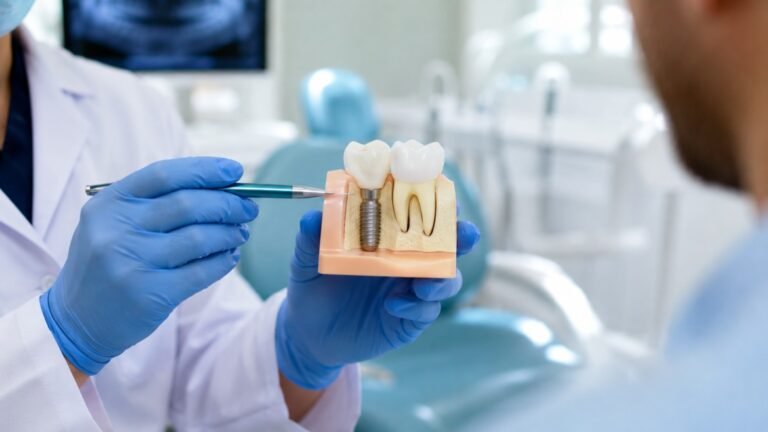
A dental implant is a modern tooth-replacement solution designed to replace the root portion of a missing tooth. A typical dental implant treatment consists of three main components:
- Implant: A small biocompatible fixture placed into the jawbone.
- Abutment: A connector that joins the implant to the replacement tooth.
- Dental crown: The visible tooth designed to restore appearance and chewing function.
Unlike removable dentures, dental implants are designed to become securely integrated with the jawbone. This process, known as osseointegration, provides a stable foundation for the replacement tooth.
Because the implant is anchored in the jaw, it can provide a more natural feeling compared with many traditional tooth-replacement options.
Why Choose Dental Implants for Missing Teeth?
When a tooth is lost, replacing it is not simply about filling the visible gap. A missing tooth can influence the surrounding dental structures. Over time, adjacent teeth may shift toward the empty space. Depending on the location and duration of tooth loss, changes in the jawbone can also occur.
Dental implants can help restore the missing tooth while providing a stable foundation that functions similarly to a natural tooth root. Some potential advantages include:
1. Natural-looking appearance
Modern implant crowns can be designed to closely match the surrounding teeth in shape, size, and shade. The goal is not simply to replace a tooth but to create a restoration that blends naturally with your smile.
2. Improved chewing
A securely supported implant restoration can help restore chewing function, allowing many patients to enjoy a broader range of foods comfortably.
3. Stability
Because the implant is anchored into the jawbone, it does not rely on neighboring teeth for support in the same way as a traditional dental bridge.
4. Support for facial structure
The jawbone naturally responds to the presence of tooth roots. When a tooth is missing, the bone in that area may gradually reduce. Implant treatment can help provide stimulation to the surrounding bone through the implant fixture.
5. Long-term tooth replacement
With appropriate planning, good oral hygiene, regular dental visits, and proper maintenance, dental implants can be a long-term solution for tooth replacement.
Who Can Benefit From Dental Implants?
Dental implants may be considered for people who have:
- A single missing tooth
- Multiple missing teeth
- Several consecutive missing teeth
- Completely missing teeth
- Teeth that cannot be predictably restored
- Difficulty using removable dentures
- A desire for a more stable tooth-replacement solution
However, not everyone is automatically a candidate for dental implants. Your suitability depends on several factors, including the condition of your jawbone, gum health, overall oral health, existing medical conditions, smoking habits, and the specific location of the missing tooth. This is why a detailed consultation is an important first step.
Why Treatment Planning Matters
Successful implant dentistry is not simply about placing an implant. The position, angle, depth, size, and restorative design all need to be considered before treatment begins.
At a modern dental implant clinic in Delhi, digital diagnostic tools can assist the dental team in evaluating the available bone and planning implant placement. Depending on the case, treatment planning may involve:
- Clinical examination
- Digital photographs
- Dental X-rays
- 3D imaging such as CBCT when required
- Digital scans
- Evaluation of gums and surrounding teeth
- Assessment of bone volume
- Bite analysis
- Digital treatment planning
A carefully planned procedure can help the dentist determine the most appropriate approach for the individual patient.
The Role of Digital Dentistry in Dental Implant Treatment
Technology has significantly changed modern implant dentistry. Digital scanning and 3D imaging can provide detailed information about the teeth, jawbone, nerves, and surrounding structures. This information can be used to develop a customized treatment plan.
Digital workflows can also help dentists evaluate the proposed position of an implant before the actual procedure. For patients, this means treatment discussions can become easier to understand because the dentist can explain the existing condition and proposed treatment using digital diagnostic information.
At Tarasha Dental Clinic, advanced dentistry and digital treatment planning are part of an approach designed around precision, communication, and personalized care.
AIIMS-Trained Implant Specialists in Delhi
When considering an implant, the experience and training of the dental team are important factors. At Tarasha Dental Clinic, patients have access to AIIMS-trained dental experts for specialist dental care, including implant treatment planning.
Specialist-led treatment can be particularly valuable when a case involves:
- Multiple missing teeth
- Bone loss
- Complicated tooth loss
- Previous failed dental treatment
- Full-mouth rehabilitation
- Multiple implants
- Aesthetic concerns
- Complex bite conditions
Every patient’s situation is different, so the appropriate treatment should be determined after a professional examination rather than through a standard package or one-size-fits-all approach.
Nobel Biocare and Straumann Dental Implant Systems
The implant system used during treatment is another consideration when choosing an implant dentist in Delhi. Tarasha Dental Clinic provides implant treatment using established implant systems including Nobel Biocare and Straumann, depending on the patient’s clinical requirements. These are internationally recognized implant systems with extensive clinical use and established research backgrounds.
However, the brand of an implant alone does not determine treatment success. The outcome also depends on factors such as:
- Proper diagnosis
- Correct treatment planning
- Implant positioning
- Bone and gum health
- Surgical technique
- Quality of the final restoration
- Oral hygiene
- Patient compliance
- Long-term maintenance
Therefore, patients should evaluate the complete treatment approach, rather than choosing an implant solely because of its brand name.
What Is the Dental Implant Procedure Like?
The exact process differs from patient to patient, but implant treatment generally follows several stages.
Step 1: Consultation and Diagnosis
The first stage involves a comprehensive examination. The dentist evaluates the missing tooth area, surrounding teeth, gums, jawbone, bite, and overall oral health. Imaging may be recommended when necessary.
Step 2: Personalized Treatment Plan
After evaluating the available information, the dental team develops a treatment plan. This may include decisions regarding:
- Implant position
- Implant size
- Bone requirements
- Type of crown
- Number of implants
- Need for additional procedures
- Expected treatment timeline
Step 3: Implant Placement
The dental implant is surgically placed into the jawbone. The procedure is generally performed under appropriate local anesthesia, with additional options considered according to the patient’s needs and the complexity of the treatment.
Step 4: Healing and Integration
After implant placement, the implant needs time to integrate with the surrounding bone. The duration can vary depending on individual healing, bone quality, implant location, and treatment protocol.
Step 5: Final Restoration
Once the implant has reached the appropriate stage of healing and stability, the final crown or prosthetic restoration can be placed. The restoration is designed to provide both function and an aesthetically pleasing result.
How Long Does Dental Implant Treatment Take?
There is no single timeline that applies to every patient. Some straightforward cases can follow a relatively short treatment pathway, while more complex cases may require additional healing time or procedures. Factors affecting the timeline include:
- Number of implants
- Location of missing teeth
- Bone quality and quantity
- Gum health
- Need for bone grafting
- Need for tooth extraction
- Healing response
- Type of restoration
- Overall treatment complexity
This is why responsible implant dentistry should focus on planned treatment timelines rather than promising the same-day result to every patient. At Tarasha Dental Clinic, treatment planning can be organized around the patient’s clinical requirements and schedule wherever possible.
Is Dental Implant Surgery Painful?
One of the most common concerns patients have before implant treatment is pain. Dental implant placement is performed using appropriate anesthesia, so patients generally should not experience significant pain during the procedure.
Some soreness, swelling, or discomfort can occur after surgery as the tissues heal. Your dentist can provide appropriate post-operative instructions and medications when required. The experience varies from person to person and depends on the complexity of the procedure.
If you are nervous about dental treatment, discuss your concerns openly with your dentist before the procedure. Understanding what will happen can make the treatment experience considerably more comfortable.
Dental Implant Cost in Delhi
One of the most frequently searched questions is: “What is the cost of dental implants in Delhi?” The answer varies because dental implant treatment is not a single standardized procedure. The overall cost may depend on:
- Implant system and components
- Number of implants required
- Type of crown
- Bone condition
- Need for bone grafting
- Tooth extraction
- Diagnostic imaging
- Complexity of the case
- Type of restoration
- Additional procedures
Therefore, quoting an exact price without examining the patient can be misleading. A good dental implant clinic in Delhi should explain what is included in the proposed treatment and provide clarity about additional procedures or potential costs. At Tarasha Dental Clinic, transparent pricing and clear treatment discussions are an important part of the patient experience.
Dental Implants vs Dentures
Dentures and implants are different treatment options. Dentures are removable appliances used to replace missing teeth. They can be an appropriate option for many patients and may provide a practical solution depending on their needs.
Dental implants, on the other hand, are anchored into the jawbone and can provide a more stable foundation for individual crowns, bridges, or implant-supported dentures.
The right choice depends on your oral health, bone condition, budget, lifestyle, expectations, and treatment goals. There is no universally “best” solution for every patient. A consultation with an experienced dentist can help you understand the advantages and limitations of each option.
How to Care for Dental Implants
Dental implants do not mean that you can stop taking care of your oral health. Although the implant itself is not a natural tooth, the surrounding gums and tissues still need proper care. Good implant maintenance includes:
- Brushing twice daily
- Cleaning between teeth
- Following your dentist’s recommended cleaning routine
- Regular dental check-ups
- Professional cleaning when recommended
- Avoiding habits that can damage teeth or restorations
- Managing gum disease
- Following post-treatment instructions
Regular dental visits are particularly important because your dentist can monitor the implant, surrounding gums, bite, and restoration.
Why Choose Tarasha Dental Clinic for Dental Implants in South Delhi?
Choosing an implant clinic should involve more than comparing prices. Patients should consider the qualifications of the dental team, diagnostic facilities, treatment planning, implant systems, sterilization standards, communication, restoration quality, and long-term follow-up.
At Tarasha Dental Clinic, Lajpat Nagar, New Delhi, the focus is on combining AIIMS-trained dental expertise, advanced technology, personalized treatment planning, and transparent communication. The clinic provides specialist dental care with a focus on helping patients understand their treatment options before proceeding.
Whether you need a single tooth implant, multiple implants, or a more comprehensive implant-supported restoration, your treatment plan should be based on your individual dental condition.
Restore Your Smile With Confidence
A missing tooth can affect your confidence every time you smile, eat, or speak. Modern dental implants in Delhi can offer a stable and natural-looking way to restore missing teeth when appropriate.
The most important step is not choosing an implant quickly. It is choosing the right treatment plan. If you are considering dental implants, start with a professional consultation. A detailed assessment can help determine whether implants are suitable for you, what treatment options are available, how long treatment may take, and what costs you can expect.
At Tarasha Dental Clinic in Lajpat Nagar, South Delhi, AIIMS-trained dental experts provide personalized implant treatment using advanced planning and established implant systems such as Nobel Biocare and Straumann.
Chew. Smile. Live — like you used to.
📍 Tarasha Dental Clinic, Shop No. 1, 2 & 3, D-177, Opp. Railway Crossing, Block C, Lajpat Nagar I, New Delhi 110024
📞 011 7967 7314 | 💬 WhatsApp +91 96259 52590
🕒 Open Mon–Sun, 10:30 am – 8:00 pm
Book a free implant consultation on WhatsApp →
Frequently Asked Questions
1. Are dental implants permanent?
Dental implants are designed as a long-term tooth-replacement solution. Their longevity depends on oral hygiene, gum health, bite, lifestyle, implant maintenance, and regular dental care.
2. Are dental implants suitable for older adults?
Age alone does not automatically rule out implant treatment. Suitability depends on oral and general health, bone condition, medications, and other individual factors.
3. Can one missing tooth be replaced with an implant?
Yes. A single missing tooth can often be replaced using an implant-supported crown, provided the patient is clinically suitable.
4. What if I have bone loss?
Some patients with insufficient bone may require additional procedures such as bone augmentation before or alongside implant treatment. Your dentist can determine this through clinical and radiographic assessment.
5. How do I find a dental implant dentist in Delhi?
Look beyond advertisements and pricing. Consider the dentist’s training, experience, diagnostic approach, treatment planning, implant systems, restorative expertise, transparency, and follow-up care.